Sunday, February 14, 2016

Thailand

It has been a dream of mine to visit Thailand. The beauty and culture of the country intrigues me.
Buddhism is the dominant religion and influential in every day life. 95% of the population is Buddhist and signs around Bangkok said "for King, country and religion".  Many people and businesses installed spirit houses, miniature houses where they believe the spirits of the deceased live. The people offer food and drink every day to these spirits to keep them happy.
To greet a person you put your hands together and in front of your mouth and slightly bow while saying: "sawat di khu" if you are a woman and "sawat di khap" if you are a man.
Most boys will enter monkhood once in their lifetime to learn Buddhist teachings and to practice abstinence. They would usually enter the monkhood for three months. Prior to entering monkhood the boy is escorted by a procession of family and friends to the temple where his head is shaved. I took this video of a monk ceremony at a cultural show.
Sword fighting has been important in fighting wars. We learned that men and women were expert swordsman and fought side by side in battle.
A Thai wedding starts at sunrise where the groom and his friends and family parade to the brides family. The procession bears gifts and dowry which is usually gold. At the brides house the groom must pass gates of chains set up by her relatives to gain access to their house. Once there, the elders discuss the dowry with the brides family and the gifts are brought. The wedding ceremony is simple with the bride and groom bound by a simple, light thread which is placed on the heads of the couple. Then all of their relatives and friends bless their union by pouring holy water over their hands.


Thursday, February 11, 2016

Wat Arun

Wat Arun is a Buddhist temple on the Chao Phraya River in Bangkok, Thailand. It is the temple of the god Arun, who is personified by the rising sun.
The temple is 282 feet tall and is covered withe porcelain and seashells.
The temple was being restored so we didn't get the full scope of it's beauty, but the craftsmanship was beautiful.


Wat Pho, Bangkok, Thailand

Wat Pho, better known as the Temple of the reclining Buddha is a temple complex in Bangkok, close to the Grand Palace.
The temple was first built by King Rama I in 1788 and expanded by his grandson Rama III. Rama I had many Buddha images from delapidated temples throughout Thailand brought to the complex where they have been preserved and are on display. The temple complex has 1,000 Buddhas and is home of one of the largest Buddhas, the reclining Buddha which is 150 feet tall.


Floating Market, Bangkok, Thailand

I love going to local markets. I love the business, the sound of deals being struck, the smell of local foods and looking through the many goods for sale.
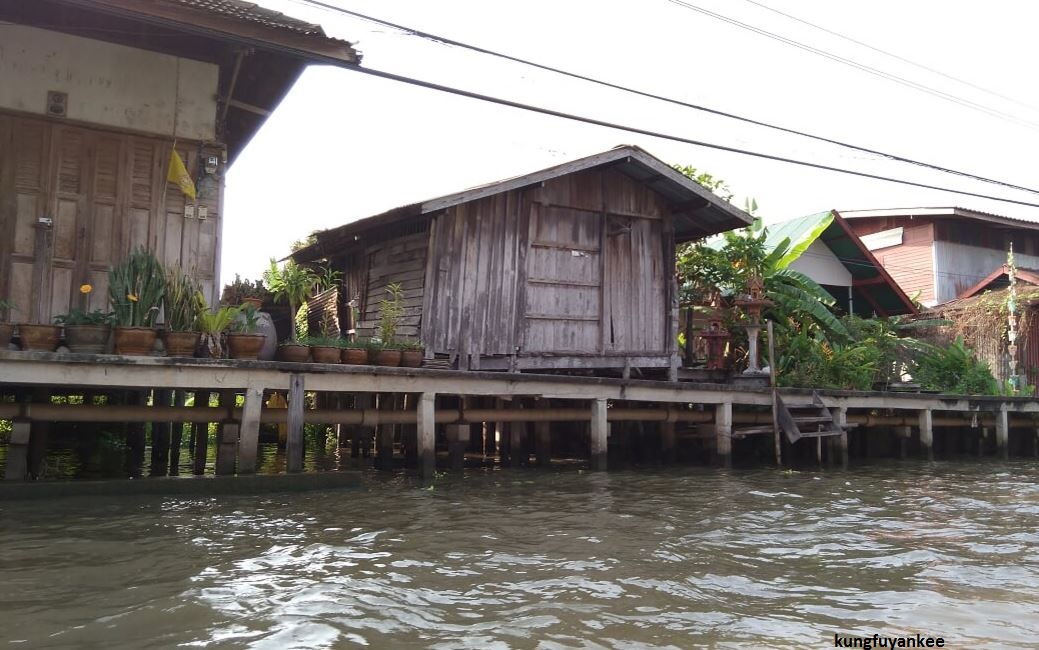
The floating market two hours outside of Bangkok was not a disappointment. We hired a boat to drive us along the many canals.
We tried some amazing food which included: coconut pancakes, mango with rice and cream, coconut ice cream, egg rolls and pad thai.
If we found something we wanted to buy the boat captain took us over to the side where we would sit in the boat and haggle a price.


Small family Buddhist shrine.


This lady made and sold coconut pancakes
from her boat. They were delicious!


We passed many salt fields like this on the 
way to the floating market.

Saturday, January 16, 2016

The Silk Road Museum

The beginning of the Silk Road was in the West Market, Xi'an, China. In it's place, a museum has been built which preserves artifacts from the Silk Road.
The Silk Road was an important trade route connecting China with India, Persia and the Mediterranean beginning around 207 AD during the Han Dynasty. Although many goods were traded, the trade route was given the name of the Silk Road because trading in silk was so lucrative.
The Silk Road was an important avenue of spreading religion. Judaism, Zoroastrianism, Christianity, Islam and Manicheism were all spread throughout the area because of the trade route.
Besides religion, food, dancing, art and dress were shared between many cultures along the Silk Road.
At the museum we saw pits that showed underground aqueducts used for water. Archaeologists have uncovered water wells and wheel tracks that have been preserved.

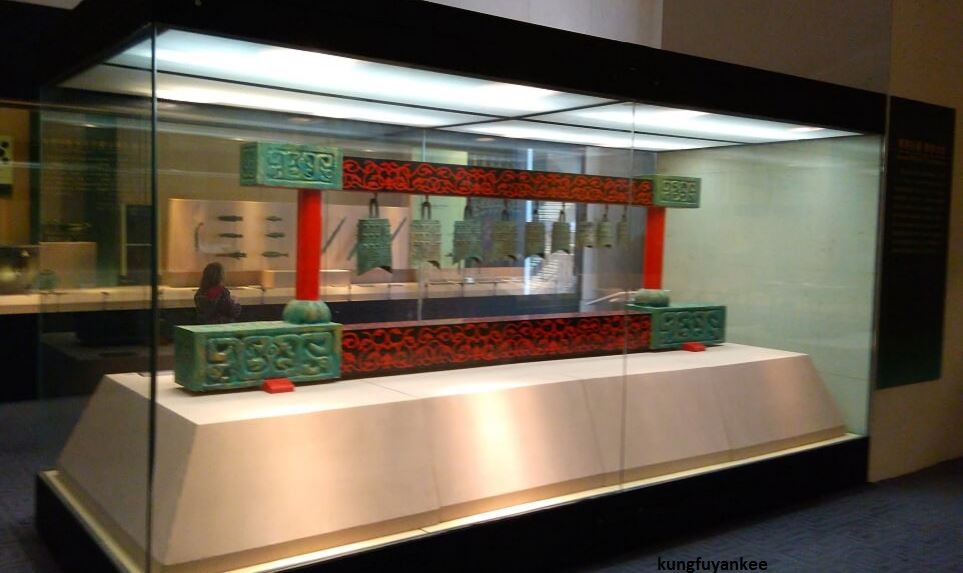
Bells

The museum displayed ancient money from: Greece,
Persia, India and China. These coins are Greek.

Wagon tracks and aqueduct.

Copper Vases.

Sunday, January 10, 2016

Yuan Family Village


Street made of old doors


Grinding cornmeal 

Vinegar vats

Blacksmith. He made these tea kettles

Pastries


Wanting to escape to horrific pollution we decided to take a hour long road trip North of Xi'an to the Yuan Family Village. The air wasn't as clear as we had hoped, but the village was awesome. This quaint village that puts traditional Chinese industry and folk arts on display.
One street was made entirely of old wooden doors. It was awesome to see the workmanship that went into these heavy doors.
We first spent time tasting local food. We tried  chocolate pastries. They were cake filled with a pudding and were delicious. We had lamb, nan bread and soup. We also tried scorpion. It tasted crunchy and salty, kind of like popcorn.
In the village we saw the process of making vinegar. A woman told us that it takes six months minimum to produce the vinegar. We saw chili powder, cornmeal and canned chili being made and we saw blacksmith making iron tea kettles. We watched a weaving demonstration and there was a man selling hand made Chinese tops. They were so cool that we had to buy one. We thought it was a steal of only $3.20 US dollar.

There were demonstrations on paper cutting and painting. The girls really liked riding on a little goat cart. A highlight were some children aged eight to twelve performing street acrobatics. Their talents and strength were amazing.

Tuesday, January 5, 2016

Pulau Bintan, Indonesia

We decided to take a quick ferry ride to Bintan, Indonesia to spend a few days. It was a great decision.
A hotel worker gave me a brief history of the island. He said that people have lived on the island since 200 AD. The island has been an important port for sea trading between China and India. He said at times it has been under control of China, the Arabs, British and Dutch.
The island gets it's name from a local legend. According to the story, a prince asked a local princess to marry him. She rejected him and threw his jewel ring into the sea and it became the island of Bintan. 
We loved playing on the beaches. The sand was a beautiful white color and the blue water was striking against it. Mr. Kungfuyankee had a good time snorkeling and seeing the sea life.
We had the opportunity to attend a cultural show and elephant show. (videos of dancing and music are posted in the previous four blue links). Second daughter got to tell the elephant numbers and it would pick up the correct numbered card and bring it to her. Mr. Kungfuyankee got to be the goalie against an elephant playing soccer. I think they both enjoyed it. 
After the show, we all got to ride an elephant. It was awesome. They had me sit on the hip bone so the ride as really bumpy. Elephant skin is really soft but their ears are rough and the elephant hair is course.
Mr.Kungfuyankee surprised us with a night safari where we got on boats and drove down a river and got to catch fireflies. The fireflies live in the mangrove trees next to the river. The girls and I had never seen fireflies so we loved catching them and holding them. It was a real treat. 
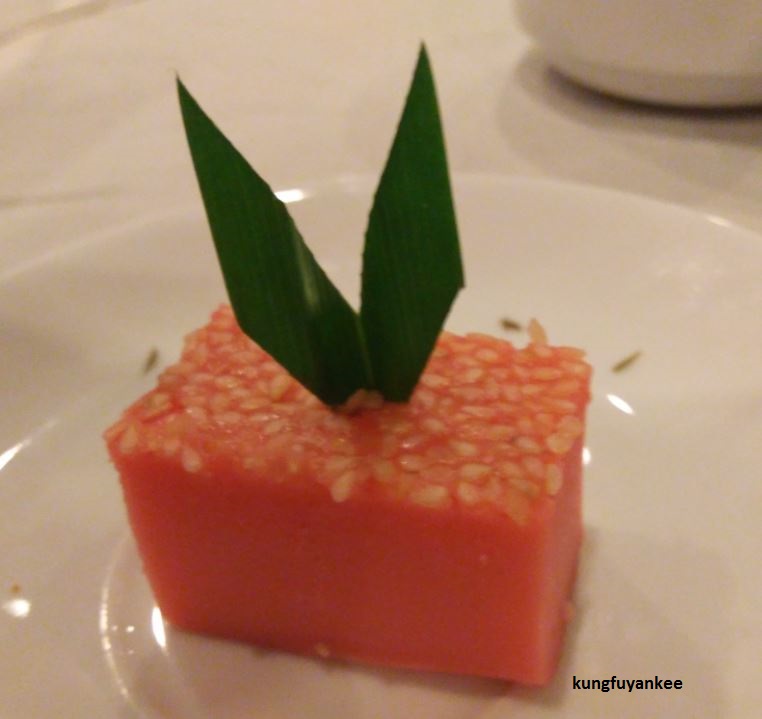
Traditional Indonesian food included a sweet curry and we tried a traditional caked called Srikaya Panggang. It was thick and had the consistency of mousse but tasted like rice.


Srikaya Panggang