Monday, March 28, 2016

Chinese Weddings

Spring time has arrived in Xi'an, bringing warm breezes, tree blossoms and weddings. While we see wedding car caravans often, it seems we have seen more of them lately.
To set the stage, the men must meet certain requirements that Chinese society and women have mandated. He should be earning at least $635 USD a month, have his own house and his own car. Most times, the parents of the groom will use all of their savings to buy him house and or car. Because of these strict requirements, many men don't get married before their thirties, and you can understand why mom and dad move in with him in their later years.
Women tell me that when dating, the man will treat the woman with a lot of respect and buy her many gifts, but once they are married, verbal and or physical abuse is normal. Because of these circumstances, many women want to date a perspective husband for many years.
Before a wedding takes place, the couple will get engaged. This is a big deal, as both families will present their credentials to each other and the families agree on the betrothal amount the boys family must pay to the brides family.  Depending on the families circumstances, this is usually a large sum. Because of this, and because the grooms family covers the cost of the wedding, many of my younger friends want to have daughters.
The Chinese want to be married on a lucky day, so the families will consult a fortune teller that will tell them a lucky day. He or she consults a book that has information about the sun, birthdays and years of the couple and other formulas to figure out the best day to get married.
When driving to the wedding ceremony, the families of both the bride and groom decorate their cars with wreaths and flowers.


Chinese weddings typically are huge celebrations. We have not been invited to a Chinese wedding, but I have been told a lot about them. If you are a guest, you are expected to give moneyin a red envelope as a gift. Giving $400 RMB is bad luck, because the number 4 is unlucky as it sounds similar to the word death. My friends say that you give as much as you can, but giving $600 RMB or $800 RMB is considered very lucky.
Before the wedding, the bride and groom get their pictures taken and make extensive wedding photo albums. For these albums, they will wear a lot of different costumes and wedding attire from different cultures. Many brides will also choose to wear a white western style wedding gown for the photo shoot.  While many pictures are taken before the wedding, pictures are not taken of the wedding or reception.
During the wedding, the bride will wear a western white wedding dress and change into a traditional Chinese red wedding dress, The bride and groom will go to each table and toast their guests. The banquet meal has six of more courses!
Many weddings will decorate with a symbol that means double happiness. This is considered lucky and they want to wish the couple happiness.


                                                                  Double happiness

To celebrate the wedding people will shoot off firecrackers and confetti cannons that have cut outs of the double happiness.

Sunday, March 13, 2016

Picking Strawberries

One thing I like about Xi'an are the local fruit orchards, vineyards and strawberry fields that let you pick your own fruit. The strawberries were grown in huge greenhouses. Not only were the strawberries delicious, but I think the green and red plants contrasted against the black tarps were beautiful. 


Saturday, March 5, 2016

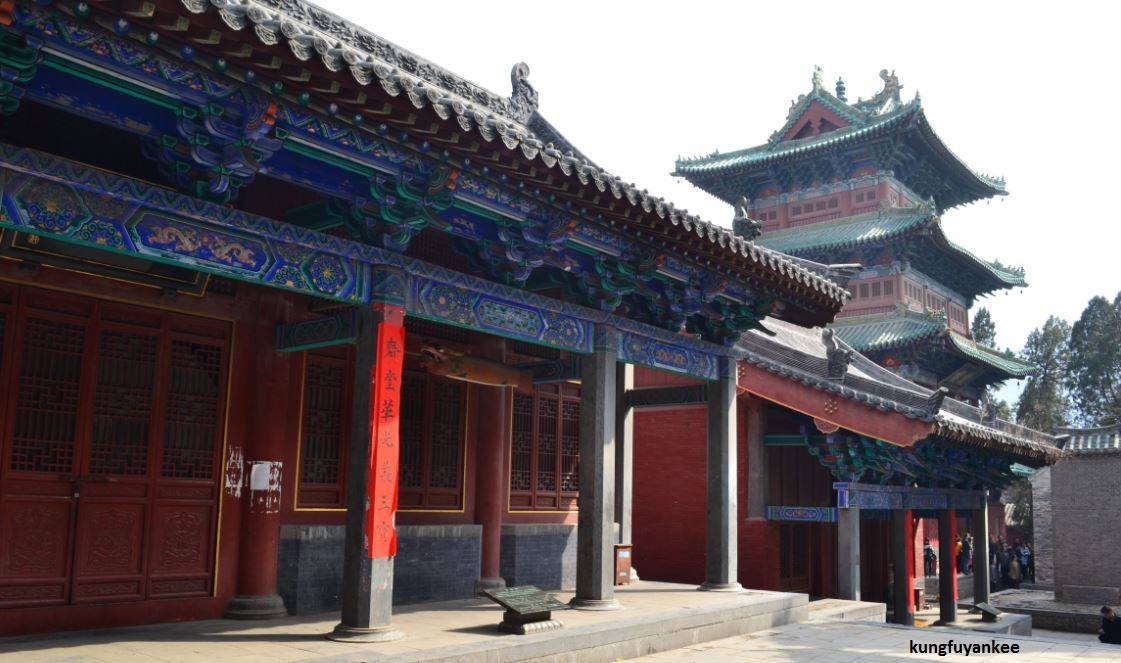
Shaolin Monastery 少林寺

An hour drive outside Luoyang is the Shaolin Monastery, credited as the birthplace of Shaolin and Kung Fu.
The monastery was built on the north side of Mount Song, one of the sacred mountains of China by Emperor Xiaowen of the Wei Dynasty which was about 447 AD.
The monastery has a long cyclical history of flourishing then being destroyed by bandits or rebels fighting against the dynasties that supported the monastery. More recently, during the Cultural Revolution (1966) the five monks in the monastery when the Red Guards attacked where shackled and paraded through the streets where people threw trash at them. The Red Guard destroyed many of the relics the monastery once housed.
More recently, martial arts groups all over the world donate money for the upkeep of the monastery. At the temple we saw many monks and many people of all ages taking martial arts classes.
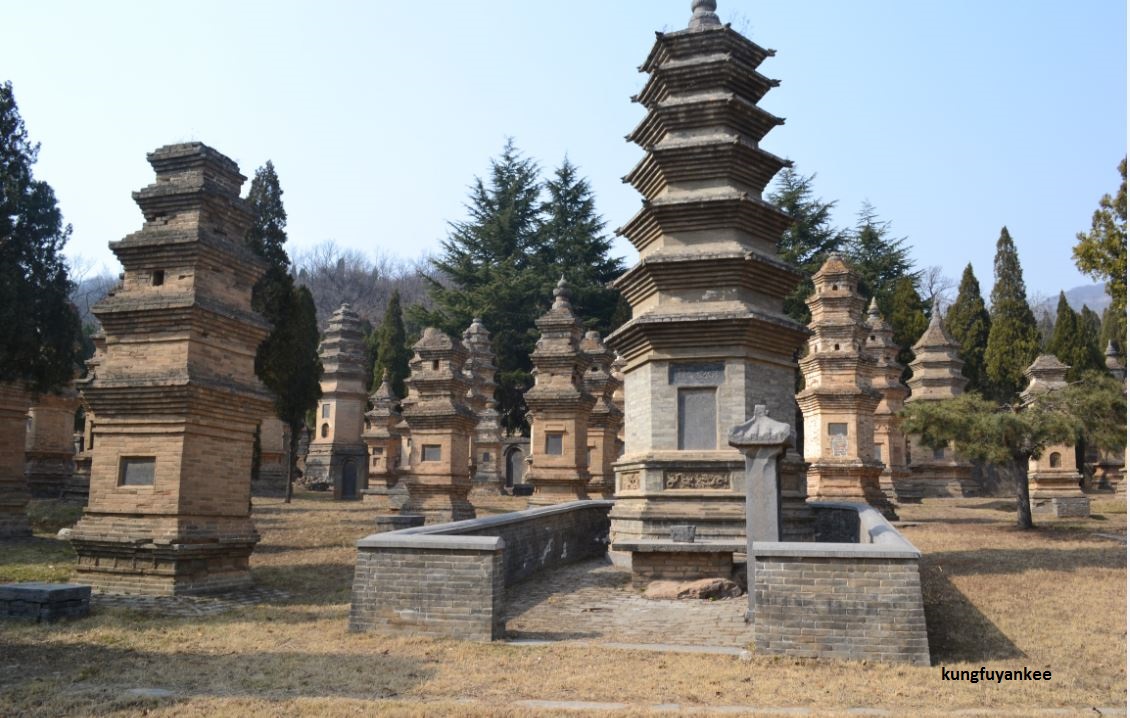
The monastery had a really beautiful pagoda forest which are pagoda tombs for monks. The pagodas were built from 791 AD through 1917.
We also went to Shaoshi Mountain which is a sacred Taoist mountain. We rode a pagoda up half of the mountain but didn't hike up the mountain where we could cross a hanging bridge and go to a monastery at the top of the mountain.

Shaolin Temple

Pagoda Forest


Tuesday, March 1, 2016

Luoyang, China 洛阳

We took a day trip to Luoyang, China which is east of Xi'an. Luoyang was an ancient capital of China and sits where the Yi and Luo rivers meet.
Luoyang is the home of the Longmen Grottos. over 23,000 caves were carved into the hillside and 100,000 Buddhas were carved into the caves and surrounding stone, making this one of the most exquisite examples of Buddhist art. The Buddhas ranged in size from 1 inch to 57 feet. The caves also had 2,500 in scripted stilles and 60 pagodas carved into the rock. Unfortunately, many statues were looted by the Japanese during the Sino-Japanese War (they are housed in Japanese museums) and the statues that survived the Japanese invasion had most of the heads chiseled off the Buddhas during the cultural revolution.
My kids thought it was boring and hard to walk up and down the stairs, but I thought it was breath taking and worth the hike.


Sunday, February 28, 2016

Chinese New Year

We survived Chinese New Year in China! This was the loudest, longest holiday I have ever participated in. The Chinese celebrate this holiday by spending a lot of time with family, eating tons of food, and fireworks.
The holiday is celebrated for two weeks in China. This means that most people get two weeks off work to travel to their hometown to visit family. This also meant that most grocery stores, convenience stores, etc. were closed. So we had to stock up on a lot of food before the holiday started.
 To celebrate the actual night of the Chinese New Year the Chinese will eat dinner with the husbands’ family. They also spend the next day with his family, but after those two days they can visit the wife’s family or go on vacation.
Dinner is a big deal for the Chinese. My friends and their moms spent days cooking special dishes. They all ate fish, which signifies prosperity. They only ate half of the fish because if you eat the whole thing it means that there isn’t enough to go around and the next year will not be bountiful. They also serve a lot of other dishes that sound similar to the words lucky, prosperity, etc. When each dish is placed on the table people will often cheer with joy and appreciation.
After dinner, people will visit and children are given red envelopes filled with money. People will then spend the next few days watching a telethon of performances by famous actors, singers, etc. that is sponsored by the government.
When visiting family and friends it is customary to take mandarin oranges as a gift and in return they give some back to you. The oranges signify wealth and good will.
The Chinese New Year decorations were beautiful! The people put red banners on the outside and tops of their doorways. These banners have lucky sayings on them and keep bad luck and evil spirits away. These banners will stay up all year. Stores, light poles, bridges and even personal residences put up red lanterns that were lit at night.
We went to the Xi’an city wall to see a  display of lanterns. They were beautiful. A lot of children were carrying lanterns as they walked along the wall.
Fireworks were constantly going off for the two weeks of Chinese New Year. When I say constant, I mean they started daily at 6 am and would go off all hours of the day until 2 am most nights. While some fireworks fly into the sky like American fireworks, many of the fireworks here are like our firecrackers. Loud!

The last night of the festival, people gathered in local parks to light of fireworks, firecrackers and lit off floating lanterns. It was a spectacular sight.


Xi'an city wall

View of Xi'an from the city wall

Floating lanterns

Friday, February 19, 2016

Vietnam

Vietnam had never been on my radar to visit, but it looked interesting and was affordable to go so we decided to go We visited Ho Chi Minh, formerly known as Saigon. The name of the city was changed at the Vietnam War and was named after the general of North Vietnam when the Vietnam War broke out.
The city itself was beautiful, busy, colorful and friendly.  
Ho Chi Minh sits along the Mekong River delta and the Saigon river. The river was beautiful and calming. The city has 9 million people and I am not joking when I say at least half ride motor scooters. There were tons of traffic jams filled with scooters.
We loved the food there. Even daughter #2 who only eats bread, bananas and rice after her obligatory 5 bites of dinner loved the food. We could eat fresh coconuts, mangos and seafood cheaply by US standards. 
While in Vietnam we went to the Reunification Palace, say the post office and Cathedral of Notre Dame. We also went fishing and took a day tour on the Mekong River. The day started with a two hour bus ride through rice fields. We then got to the Mekong River and took a boat to a bee farm and had amazing honey tea, local fruits like wax and water apples and listened to local music. We then took a boat ride through some canals. We took another motor boat to another island and got on a horse (we'd call it a pony in Idaho) cart and ate lunch. After lunch we took another boat down another canal and saw a live crocodile. Oldest child now claims that we survived a crocodile attack although it didn't move when we passed by. We then went back to our hotel, exhausted and ready to sleep. 
I really liked Vietnam. The people were so nice. Many came up to me and said they thought it was cool that we had three girls.  The food was delicious as well.


Water apple


You can kind of see on the bottom that this
man is carrying a live chicken attached to his 
scooter.

Rice field and graves. It is common for 
people to be buried on their land.

Horse cart.


Buddhist temple


Sunday, February 14, 2016

Ayutthaya, Thailand

Ayutthaya was founded in 1350 AD and became the capital of the second kingdom of Siam by a king who went to the city to escape a smallpox outbreak in the city Lop Buri. The city was a large city, estimated to have 1 million people by the year 1700 and was a trade hub in southeast Asia. In 1767, the city and kingdom were destroyed by the Burmese.
People fled the city and formed Bangkok as the capital. Today, the Aytthaya ruins are a UNESCO World Heritage Sight.